Operational Excellence Does Not Automatically Create Enterprise Leadership
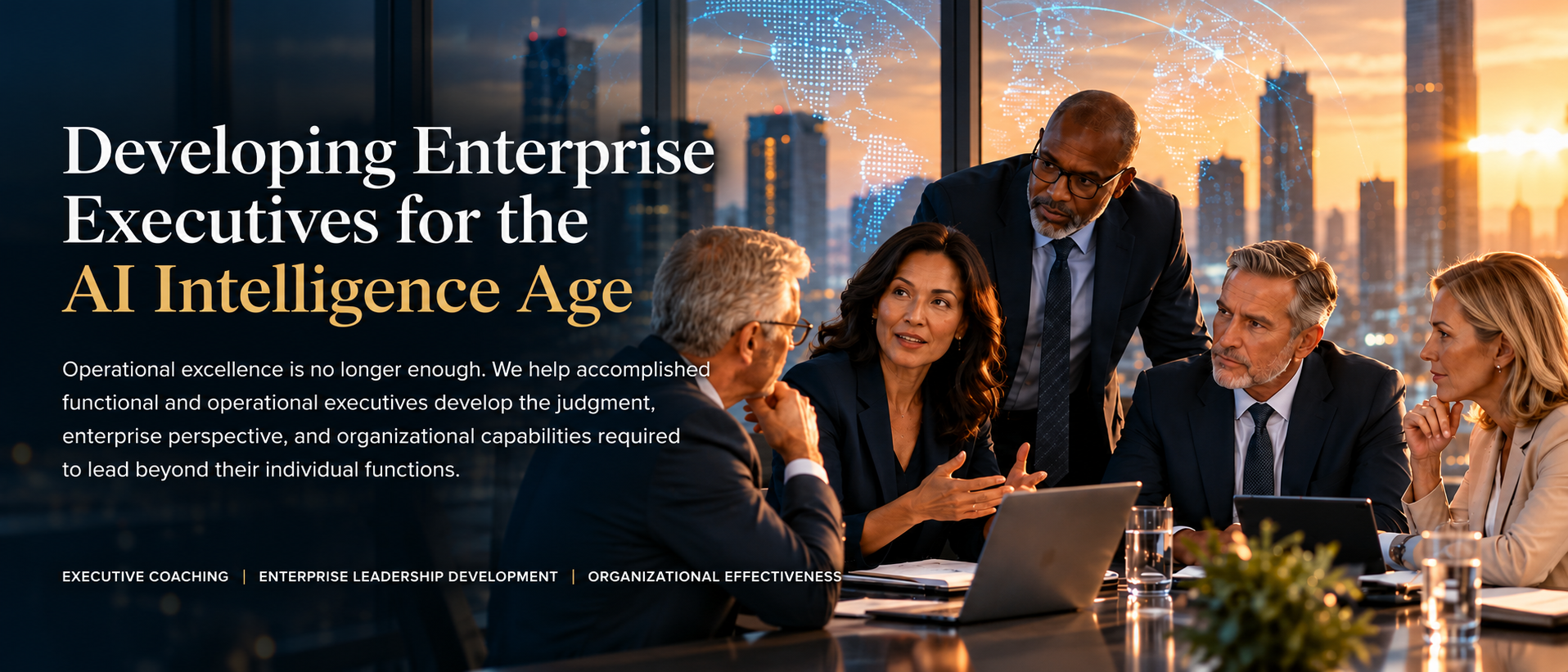
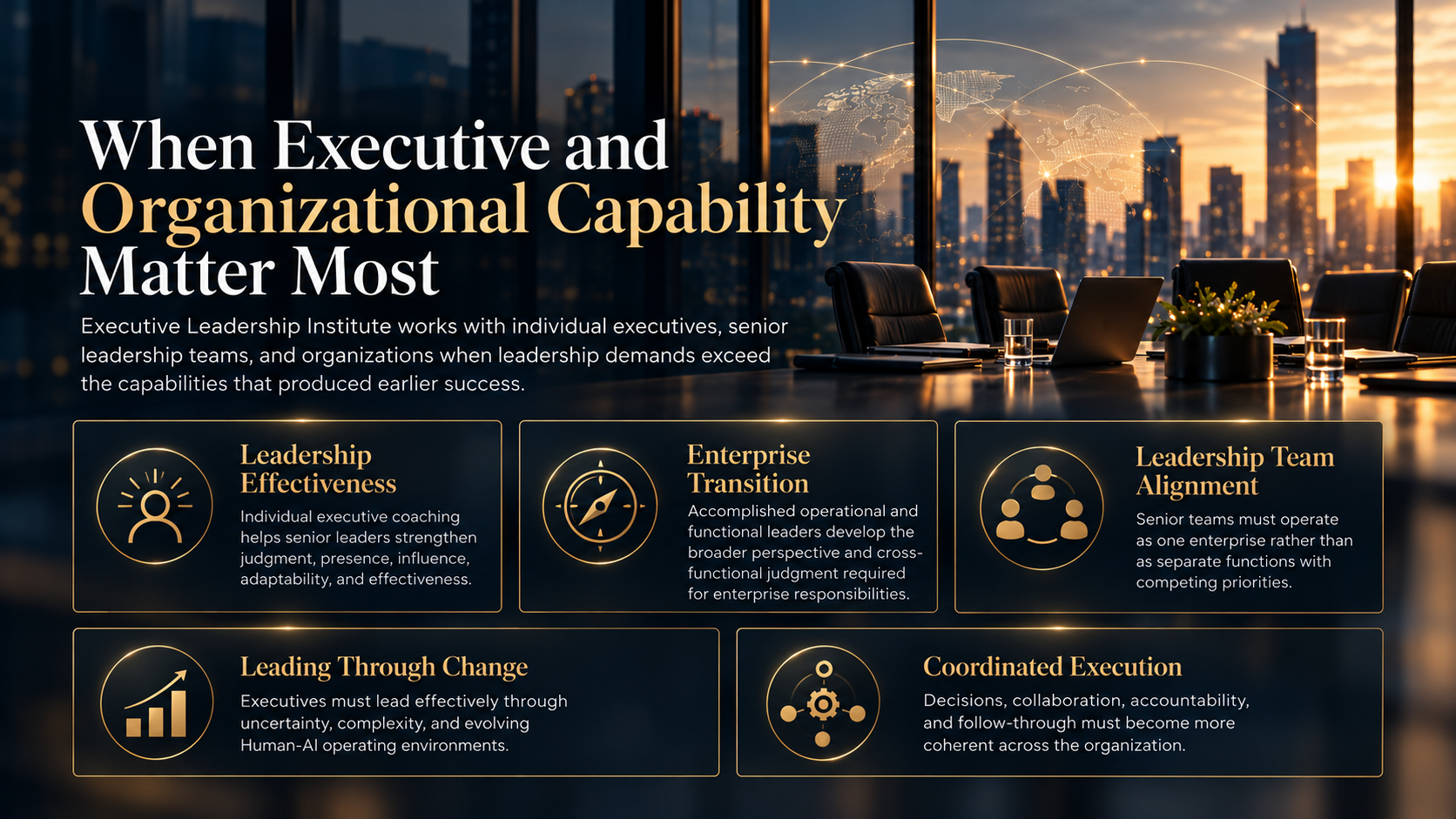
Organizations often promote their most accomplished functional and operational leaders into broader executive responsibilities.
But the capabilities that produced success within a department or function do not automatically translate into enterprise leadership.
Enterprise executives must see beyond their own operations, navigate competing priorities, exercise sound judgment, collaborate across functions, and translate organizational direction into coordinated execution.
As AI changes how decisions are made and work is performed, these demands are becoming even greater.
What Executives Say
Trusted by senior leaders navigating consequential leadership challenges.
The strongest measure of this work is what changes in how leaders think, lead and work together.


Karen Roch
President & CEO
Credit Union West
“This program really gets to the core of what it means to be an effective leader, uncovering not only the skills to navigate challenges and drive positive change.”
Following our executive leadership engagement, Karen challenged the organization to move beyond executive coaching and develop an enterprise-level approach capable of measuring and strengthening organizational capability.
Dave Doss
Former President & CEO
OneAz Credit Union
Board Chair, PSCU (now Velera)
“Jim’s approach is unique and highly effective. He understands executive leadership at a level that goes well beyond traditional coaching.”
Following our discussions of Enterprise Intelligence™, Dave introduced the concept to respected industry leaders because he believed it represented an important new direction for financial institutions.
Experience That Extends Beyond Executive Coaching
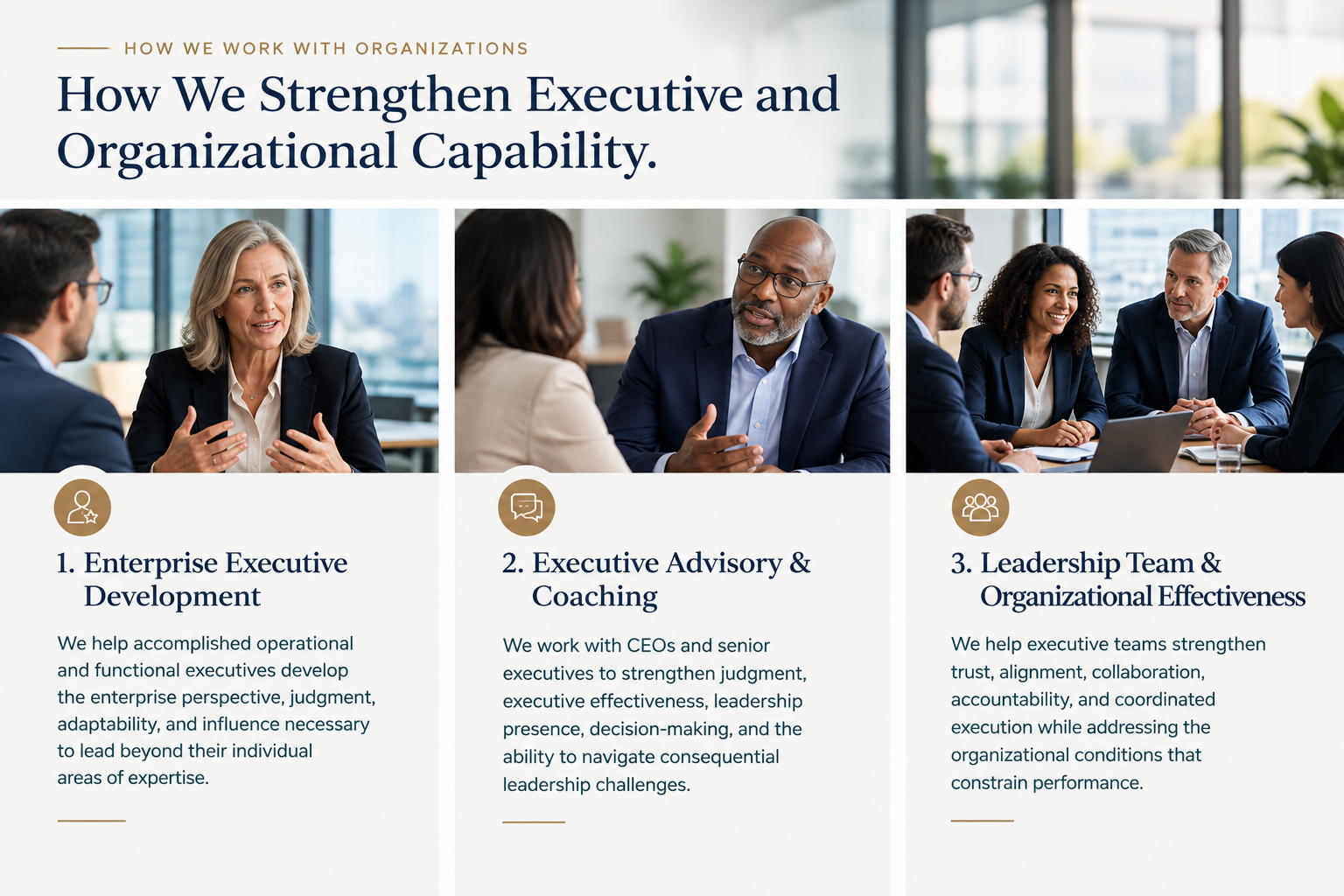
Dr. Jim Rives is the founder of Executive Leadership Institute and an experienced executive advisor and coach specializing in enterprise leadership development, executive effectiveness, and organizational transformation.
His career spans executive recruiting, CEO and board advisory, individual executive coaching, senior leadership team development, and organizational consulting. He has worked with executives across financial services, municipalities, government, and education.
Jim brings a distinctive perspective to executive coaching, combining firsthand knowledge of executive responsibilities with behavioral change, neuroscience-informed development, leadership assessment methodologies, and practical application to real organizational challenges.
His work focuses on helping accomplished functional and operational leaders develop the judgment, enterprise perspective, adaptability, and influence required to lead beyond their individual areas of expertise.
As founder of Entwyna AI™, Jim also brings a forward-looking understanding of how Human and Artificial Intelligence are reshaping executive leadership and organizational capability.
Executive Coaching | CEO Advisory | Enterprise Leadership Development | Organizational Effectiveness


Leadership Must Evolve as Intelligence Evolves
Artificial Intelligence is changing how organizations make decisions, coordinate work, distribute authority, and maintain accountability.
The challenge is not simply learning to use AI. It is developing executives and organizations capable of leading effectively as Human and Artificial Intelligence increasingly work together.
Executive Leadership Institute addresses the human leadership and organizational effectiveness dimensions of this transition.
Through Entwyna AI, this work extends into Enterprise Intelligence™, a broader architecture for strengthening organizational capability in the AI age.